UV LED Curing Provider
Digital Printing UV LED Curing
JP TECH UV LED Curing System for Digital Printing: The Complete Industry Guide
Digital printing is changing fast. Many factories now use the JP UV LED Curing System to dry inks on different materials. In the past, companies used big heat ovens or hot mercury lamps. Now, China UV LED Curing System technology is the new standard. This technology uses ultraviolet light from LEDs to harden ink instantly. It is faster and uses less energy. JP TECH provides these advanced systems to help printers work better. This guide explains how the system works and why it is good for your business.
What is UV LED Curing in Digital Printing?
UV LED curing is a chemical process. It is not like normal drying. When you dry ink with air, the water or solvent goes into the air. But when you use a JP LED UV Curing System, the ink turns into a solid on the surface. This happens because of a reaction called photopolymerization .
The process is very simple. First, the printer puts ink on the material. Then, the UV LED lamp shines a specific light on the ink. This light hits special chemicals in the ink called photoinitiators. These chemicals start a chain reaction. This reaction links the ink molecules together very fast. In less than one second, the ink is dry and hard.
Key Parts of the System
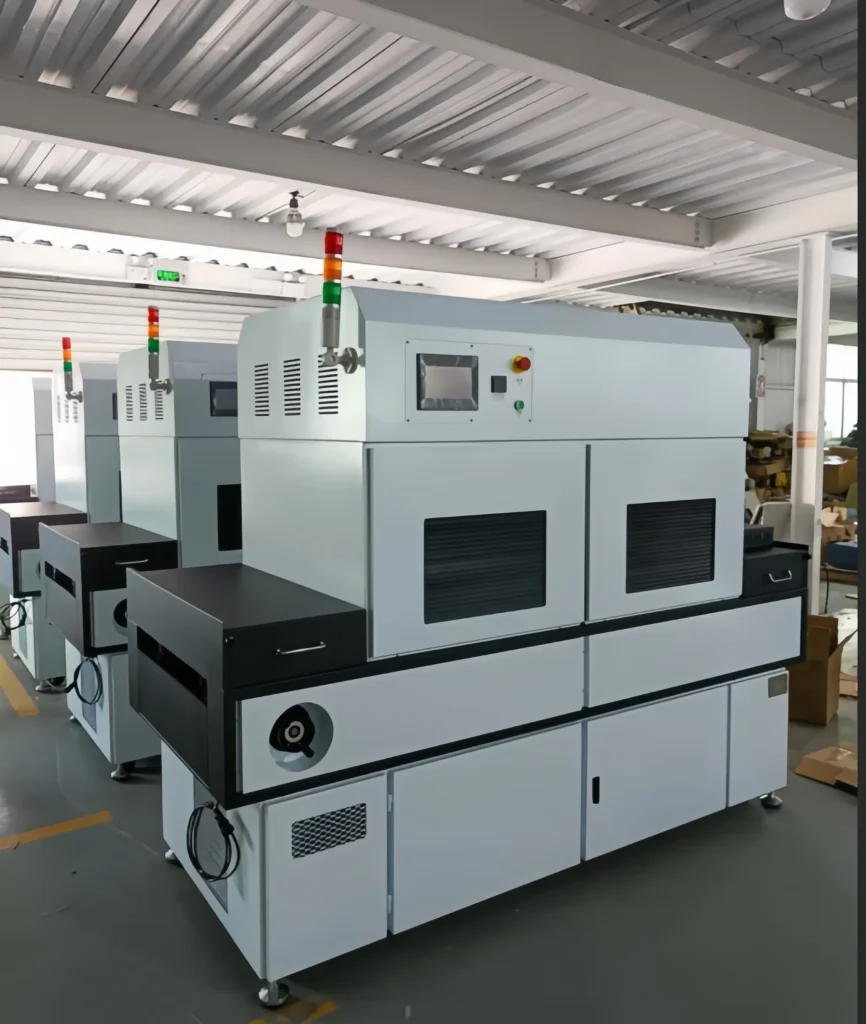
A standard Drying system for Adhesive printing or digital inkjet printing has three main parts:
- LED Head:This part sends out the UV light.
- Controller:This manages the power and timing of the light.
- Cooling System:This keeps the LEDs from getting too hot so they last longer .
Why the Industry is Switching to JP UV LED Curing Systems
Many factories are replacing their old lamps with JP TECH systems. There are many reasons for this shift.
1. Instant Curing and High Speed
Old lamps need 5 to 10 minutes to warm up. The JP UV LED Curing System turns on and off instantly. This means you can start printing right away. Also, because the ink dries in a fraction of a second, the machine can run at very high speeds. You can handle the printed products immediately.
2. Cold Curing for Sensitive Materials
Mercury lamps get very hot. This heat can melt thin plastic or warp films. But JP TECH LEDs are “cold” light sources. They send out UV light but very little heat. This allows you to print on:
- Thin plastic films.
- Heat-sensitive labels.
- Sensitive electronics components.
- Synthetic papers like Tyvek .
3. Lower Energy and Operating Costs
A China UV LED Curing System uses much less power. In fact, it can save up to 70% or 80% on electricity . Also, the LEDs last for a long time. A normal lamp lasts 2,000 hours. A JP TECH LED module lasts for 20,000 to 30,000 hours. You do not have to buy new bulbs often.
Feature | Old Mercury Lamps | JP UV LED Curing System |
Warm-up Time | 5 – 10 Minutes | 0 Seconds (Instant) |
Life Span | 2,000 Hours | 20,000+ Hours |
Heat Output | Very High | Very Low |
Energy Use | High (e.g., 7kW) | Low (e.g., 2.6kW) |
Toxins | Contains Mercury | No Mercury or Ozone |
Applications in Digital Printing
The JP UV LED Curing System works with many types of digital printers.
Wide-Format and Flatbed Printing
Flatbed printers use UV LED lamps to print on hard things like glass, metal, and acrylic . The lamps are usually on the side of the print head. They follow the head and cure the ink as it hits the surface. This creates sharp images with vibrant colors because the ink does not soak into the material.
Label and Packaging Printing
Labels need to be tough. They must resist water and scratches. UV LED ink is very durable once it is cured . For high-speed label lines, the JP TECH system provides enough power to dry ink at 200 meters per minute. It is also great for shrink sleeves because the low heat does not make the film shrink too early.
Industrial Coding and Marking
Factories use inkjet heads to print dates and codes on boxes or bottles. These lines are very fast. The JP TECH system is compact and fits into these small spaces. Because it turns on only when it sees a box, it saves a lot of money on energy .
Technical Specifications of JP TECH Systems
JP TECH offers different models for different needs.
JK-450LED Online Curing Oven
This is a powerful unit for large production lines.
- Wavelength:395nm (Standard for most inks).
- Intensity:Over 1100mW/cm².
- Cooling:Air-cooled for easy setup.
- Control:PLC control to match the printer speed.
Water-Cooled Systems for High-End Use
For machines that run 24 hours a day, water-cooling is best . JP TECH water-cooled lamps are very quiet. They can handle higher power, up to 25W/cm² or 30W/cm². These systems use a small machine called a chiller to keep the lamps cold.
Wavelength Selection
Different inks need different light.
- 395nm:Best for most color inks and deep curing .
- 385nm:Good for clear coatings to prevent yellowing .
- 365nm:Provides high energy for a very hard surface .
How to Set Up Your UV LED System
To get the best results, you must follow a few simple steps.
1. Match the Wavelength
Your ink must be “LED-curable.” This means it must react to the wavelength of your JP TECH lamp . If they do not match, the ink will stay sticky.
2. Set the Working Distance
The gap between the lamp and the material is very important. This is called the “working distance”. For most JP systems, the best gap is 2mm to 10mm. If the lamp is too far away, it loses a lot of power .
3. Use Stable Power
LEDs are sensitive to power changes. It is a good idea to use a UPS (Uninterruptible Power Supply). This stops the light from flickering. If the light flickers, you might see lines or “banding” on your prints .
Environmental and Safety Benefits
Using a China UV LED Curing System is a “green” choice.
- No Mercury:Old lamps have toxic mercury inside. If they break, it is dangerous. JP TECH systems have no mercury .
- No Ozone:Mercury lamps create a gas called ozone. This gas is bad for your lungs. LEDs do not create any ozone .
- Cleaner Air:Most UV inks have zero VOCs (Volatile Organic Compounds). This means they do not smell bad and are safe for the workplace .
ROI and Long-Term Value
A JP UV LED Curing System costs more to buy at first. But it saves money every month. You save on electricity bills. You save because you do not have to buy new bulbs. You also save because you have fewer mistakes and less waste . Most factories find that the system pays for itself in less than one year .
Smart Integration (Industry 4.0)
JP TECH systems can connect to your factory network. You can use a computer to check the power and the life of the LEDs. This helps you plan maintenance before the machine stLooking Ahead: The Future of UV LED in Digital Printing
As technology evolves, UV LED curing will continue to push boundaries—integrating AI for real-time parameter adjustment, combining with 3D printing for textured effects, and supporting bio-based UV inks for even greener workflows. For printers, adopting UV LED isn’t just an upgrade—it’s a strategic investment in versatility, efficiency, and sustainability that will drive growth in an increasingly competitive market.
Have you used UV LED in your digital printing workflow? Share your success stories or challenges in the comments below. If you’re considering making the switch, reach out to explore how UV LED can tailor to your specific application—from architectural prints to food packaging and beyond.
How to Set Up Your UV LED System
To get the best results, you must follow a few simple steps.
1. Match the Wavelength
Your ink must be “LED-curable.” This means it must react to the wavelength of your JP TECH lamp . If they do not match, the ink will stay sticky.
2. Set the Working Distance
The gap between the lamp and the material is very important. This is called the “working distance”. For most JP systems, the best gap is 2mm to 10mm. If the lamp is too far away, it loses a lot of power .
3. Use Stable Power
LEDs are sensitive to power changes. It is a good idea to use a UPS (Uninterruptible Power Supply). This stops the light from flickering. If the light flickers, you might see lines or “banding” on your prints .
Environmental and Safety Benefits
Using a China UV LED Curing System is a “green” choice.
- No Mercury:Old lamps have toxic mercury inside. If they break, it is dangerous. JP TECH systems have no mercury .
- No Ozone:Mercury lamps create a gas called ozone. This gas is bad for your lungs. LEDs do not create any ozone .
- Cleaner Air:Most UV inks have zero VOCs (Volatile Organic Compounds). This means they do not smell bad and are safe for the workplace .
ROI and Long-Term Value
A JP UV LED Curing System costs more to buy at first. But it saves money every month. You save on electricity bills. You save because you do not have to buy new bulbs. You also save because you have fewer mistakes and less waste . Most factories find that the system pays for itself in less than one year .
Smart Integration (Industry 4.0)
JP TECH systems can connect to your factory network. You can use a computer to check the power and the life of the LEDs. This helps you plan maintenance before the machine stLooking Ahead: The Future of UV LED in Digital Printing
As technology evolves, UV LED curing will continue to push boundaries—integrating AI for real-time parameter adjustment, combining with 3D printing for textured effects, and supporting bio-based UV inks for even greener workflows. For printers, adopting UV LED isn’t just an upgrade—it’s a strategic investment in versatility, efficiency, and sustainability that will drive growth in an increasingly competitive market.
Have you used UV LED in your digital printing workflow? Share your success stories or challenges in the comments below. If you’re considering making the switch, reach out to explore how UV LED can tailor to your specific application—from architectural prints to food packaging and beyond.