Product
UV Mercury Lamp Introduction
Overview
UV mercury lamps are core components for UV curing applications. They’re designed to match the reactivity range of UV curing coatings (200-450nm, as most coatings are inactive outside this spectrum), delivering high UV intensity for efficient curing.
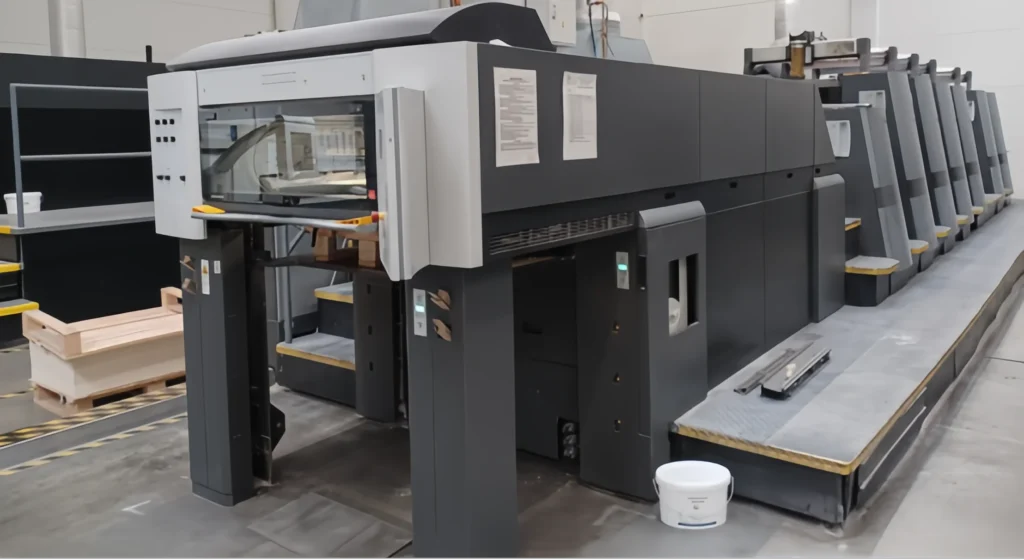
UV Lamp Classification
Commercial UV lamp tubes are categorized by energy per cm (W/cm), with common specifications:
- 80 W/cm
- 100 W/cm
- 120 W/cm
- 150 W/cm
- 240 W/cm
Common UV Curing Light Sources
Mainstream UV curing light sources include:
- Mercury vapor lamps (this guide’s focus)
- Metal halide lamps
- Electrodeless lamps
- Xenon lamps
By structure, UV lamp systems are divided into:
- Electrode-based lamps (arc lamps)
- Electrodeless lamps
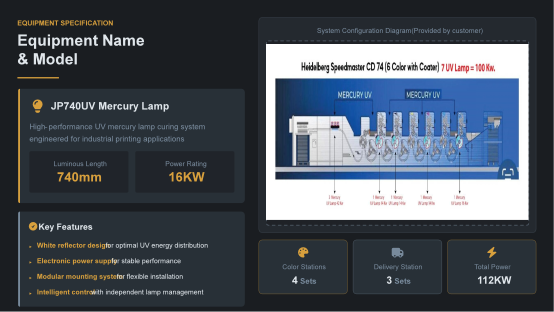
Advantages of UV Mercury Lamps
Aspect | Details |
Wavelength Coverage | Full multi-band UV emission in one tube, enabling excellent curing for both ink interior & surface (reduces product folding crack risk; good surface drying effect) |
Drying Assistance | Generates significant heat during operation, evaporating internal moisture in products to enhance drying |
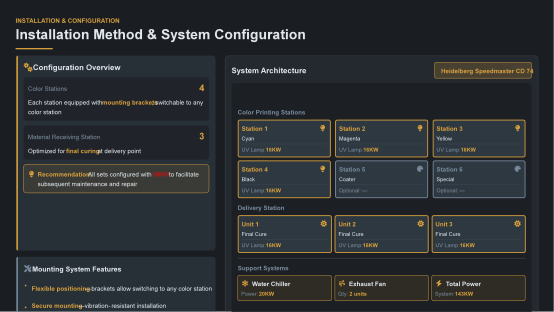
Disadvantages of UV Mercury Lamps (vs. UV LEDs)
Aspect | Details |
Electricity Cost | 50–80% higher power consumption than UV LEDs |
Ozone Emission | Produces large amounts of ozone (harmful to the environment & operators) |
Service Life | Short (requires tube replacement every ~1000 hours; UV LEDs last 10,000–25,000 hours) |
Heat Risks | Causes deformation of heat-sensitive materials (leading to printing misregistration); accelerates printer aging |
Equipment Complexity | More cumbersome structure than compact UV LED systems |
Startup Time | Long (2–5 minutes to activate; UV LEDs start instantly) |
Standby Power | Consumes 30–50% of power during printing standby (UV LEDs have low standby power) |
Eye Irritation | Full-wavelength emission includes low bands that strongly irritate eyes; unprotected exposure may cause direct injury |
Reliable & High-Performance Curing Solution for Printing Industry
In the world of commercial printing, reliability and consistent performance are the cornerstones of long-term success. For decades, UV Mercury Curing System has been a trusted workhorse in the printing industry, delivering stable and efficient curing results for a wide range of printing processes and substrates. Whether you’re engaged in offset printing, flexo printing, gravure printing, screen printing, or label printing, our UV Mercury Curing System provides the robust curing capability you need to ensure high-quality print outputs and smooth production workflows.
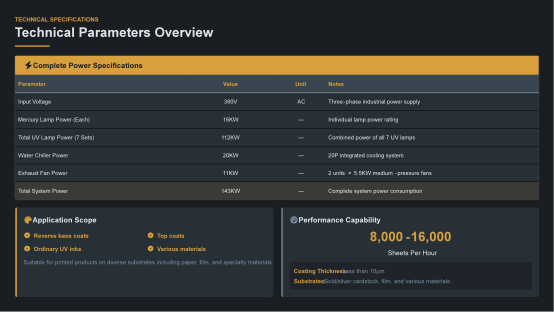
Why Choose UV Mercury Curing System? Core Advantages
As a time-tested curing technology, UV Mercury Curing System stands out for its mature performance, wide compatibility, and strong curing power—making it an ideal choice for printing businesses that prioritize stability and versatility. Here are its key advantages:
- Mature & Reliable Curing Performance
UV Mercury Curing System utilizes mature mercury arc lamp technology, which has been widely verified and optimized in the printing industry for decades. It delivers consistent UV light intensity and curing effect, ensuring that inks, coatings, and adhesives are fully cured even in high-speed production scenarios. This reliability minimizes print defects such as tackiness, smudging, and poor adhesion, helping you maintain stable product quality.
- Wide Compatibility with Inks & Substrates
One of the biggest strengths of UV Mercury Curing System is its excellent compatibility with various UV-curable inks, coatings, and substrates. It works seamlessly with traditional UV inks for paper, plastic, metal, and glass substrates—making it suitable for diverse printing applications, from offset printing of large-format packaging to screen printing of specialty products and label printing of flexible materials. No need to replace existing ink systems or adjust production lines significantly.
- High Curing Intensity for Diverse Printing Processes
UV Mercury lamps emit high-intensity UV light that enables fast and deep curing, even for thick coatings or high-solid-content inks. This makes the system well-suited for a variety of printing processes, including gravure printing of high-quality rolls, flexo printing of flexible packaging, and screen printing of custom graphics. It supports high production speeds, helping you improve throughput and meet tight delivery deadlines.
- Cost-Effective & Easy to Maintain
With mature technology and widespread market adoption, UV Mercury Curing System features low initial investment and easy maintenance. Mercury lamps are readily available in the market at competitive prices, and the system’s structure is simple and durable—reducing maintenance costs and downtime. For printing businesses with existing UV mercury curing infrastructure, this system allows for seamless upgrades and replacements without disrupting production.
- Compliance with Industry Standards
Our UV Mercury Curing System is designed to comply with global printing industry standards and safety regulations. It is equipped with advanced exhaust and cooling systems to effectively handle ozone emissions and heat generation, ensuring a safe and compliant working environment for your operators. It also meets the quality requirements for food packaging, medical packaging, and other high-standard printing applications.
How Does UV Mercury Curing System Work?
The working principle of UV Mercury Curing System is simple and efficient, relying on the chemical reaction of UV light to achieve curing:
- The mercury arc lamp inside the system generates high-intensity UV light when energized. This UV light has a broad spectrum that matches the absorption wavelength of most UV-curable inks and coatings.
- When the UV light irradiates the printed substrate, it triggers a polymerization reaction in the UV-curable materials (inks, coatings, adhesives), converting them from liquid to solid in a short time.
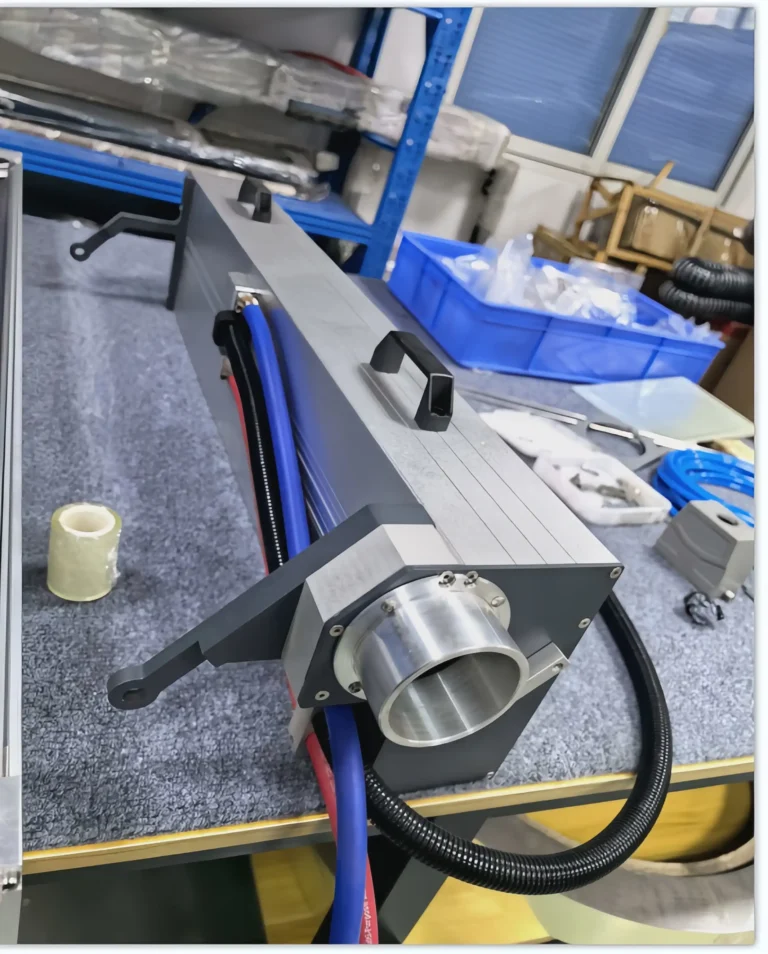
- The system is equipped with air-cooled or water-cooled cooling modules to control the temperature of the lamp and the substrate, preventing heat damage to heat-resistant materials and ensuring stable operation.
- The curing process is completed in seconds, enabling continuous high-speed production without the need for long drying times.
Ideal Applications for UV Mercury Curing System
Our UV Mercury Curing System is widely used in various commercial printing scenarios that require reliable and high-performance curing:
- Packaging printing: Offset printing of corrugated boxes, flexo printing of plastic packaging, gravure printing of food and beverage cans.
- Commercial printing: Large-format poster printing, high-gloss brochure printing, magazine printing.
- Label printing: Flexible label printing (PET, PP substrates), adhesive label printing.
- Specialty printing: Screen printing of glass, metal, and ceramic products, UV coating of wood and paperboard.
- Other applications: Curing of UV adhesives in printing post-processing, curing of coatings for decorative printing.
Ready to Enhance Your Production with UV Mercury Curing System?
If your printing business values reliability, wide compatibility, and high curing performance, our UV Mercury Curing System is the perfect choice for you. It integrates seamlessly with your existing printing equipment, helping you improve production efficiency, ensure print quality, and reduce operational risks.
Contact us today to:
- Get a customized UV Mercury Curing System quote for your specific printing equipment and processes.
- Schedule a live demo to see the curing performance in action.
- Learn more about how to optimize your curing workflow with our solutions.
Contact us: info@jpuvled.com