UV LED curing systems are known for their long lifespan and low maintenance, but proper care is key to maximizing ROI—especially for systems retrofitted to premium machines like Heidelberg, KBA, Roland, Komori, or Fuji. JP UV LED systems, backed by decades of market testing and 1,000+ retrofit cases, are engineered for easy maintenance, but these tips will further protect your investment, whether you’re running a Heidelberg offset press or a Fuji metal printing line.
- Prioritize Modular Component Care (Tailored to Machine Brands)
JP UV LED systems use a modular design (30 lamp bead modules per unit, 30 power supply modules per system)—a feature refined through 1,000+ retrofits for brands like Heidelberg and Komori. This design is intentional for easy maintenance:
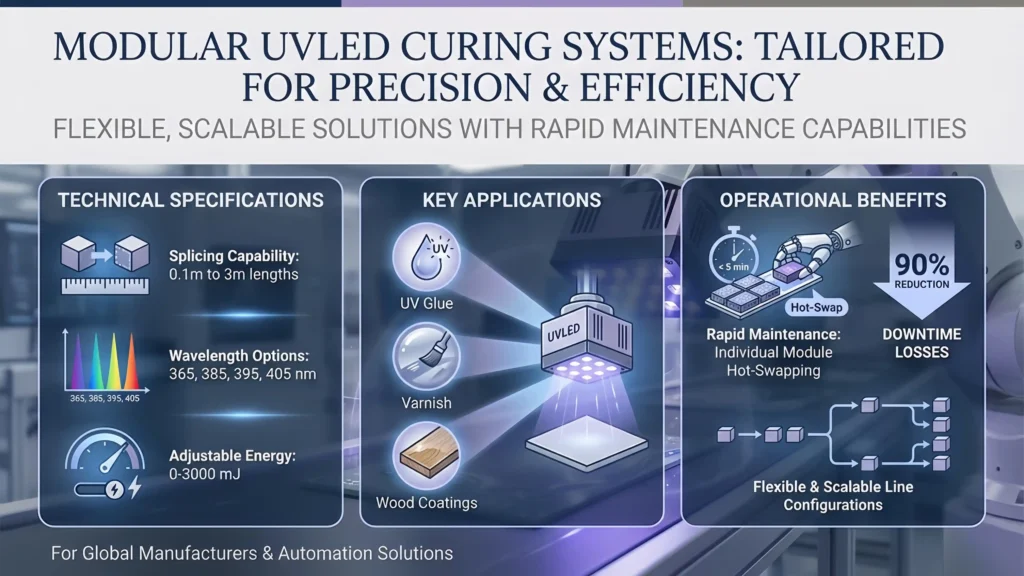
- For Heidelberg/KBA/Roland offset presses: Inspect lamp modules monthly for dust buildup (common in high-volume offset environments). If a single module fails, replace only that module instead of the entire unit—this cuts repair costs by 90% compared to integrated systems and minimizes downtime for your Heidelberg press.
- For Fuji/Komori metal/screen printers: Verify that the constant-current power supply (5-year warranty) is operating within rated parameters. Fuji metal printing lines often run longer hours, so avoiding power module overloading is critical to preventing accelerated light decay—JP’s retrofits for Fuji machines include power monitoring tools to simplify this.
- Protect Lamp Heads (Optimized for Brand-Specific Workflows)
JP’s lamp heads (equipped with imported Seoul or LG chips) have a 3-year warranty with a 25% maximum light decay limit (free full replacement if exceeded). Their design is tailored to the demands of specific machines:
- For Heidelberg offset presses: Keep the quartz glass cover clean—ink residue from offset jobs can block UV output and cause localized overheating. Use JP’s recommended lint-free cloth and cleaning agent to wipe the glass monthly; this step is especially important for Heidelberg’s high-speed workflows, where consistent UV output is critical.
- For Fuji metal printing lines: Ensure the industrial water-cooling system (2-year warranty for 8P/10P units) is functioning properly. Fuji’s metal printing processes generate more heat, so the water-cooling system (a standard in JP’s Fuji retrofits) must stay in top shape to regulate lamp head temperature and avoid chip aging.
- Manage Overall System Environment (Brand-Compatible Best Practices)
- For Komori screen printers: Keep the equipment in a dry, dust-free workspace to protect core components like Mitsubishi PLCs and Weinview touchscreens—dust from screen printing meshes can damage these parts. JP’s retrofits for Komori machines include dust shields to reduce this risk.
- For all brands (Heidelberg, KBA, Roland, Komori, Fuji): Avoid unnecessary on/off cycles (though JP UV LED lifespan isn’t affected by switching) to reduce wear on Schneider relays and contactors. This is especially helpful for facilities with variable production schedules, as it extends the life of components used across all press brands.
By following these brand-specific tips—rooted in JP’s decades of experience and 1,000+ retrofits—you can ensure your JP UV LED system maintains peak performance for its full 25,000-hour lifespan, minimizing downtime on your Heidelberg, KBA, Roland, Komori, or Fuji machines.